


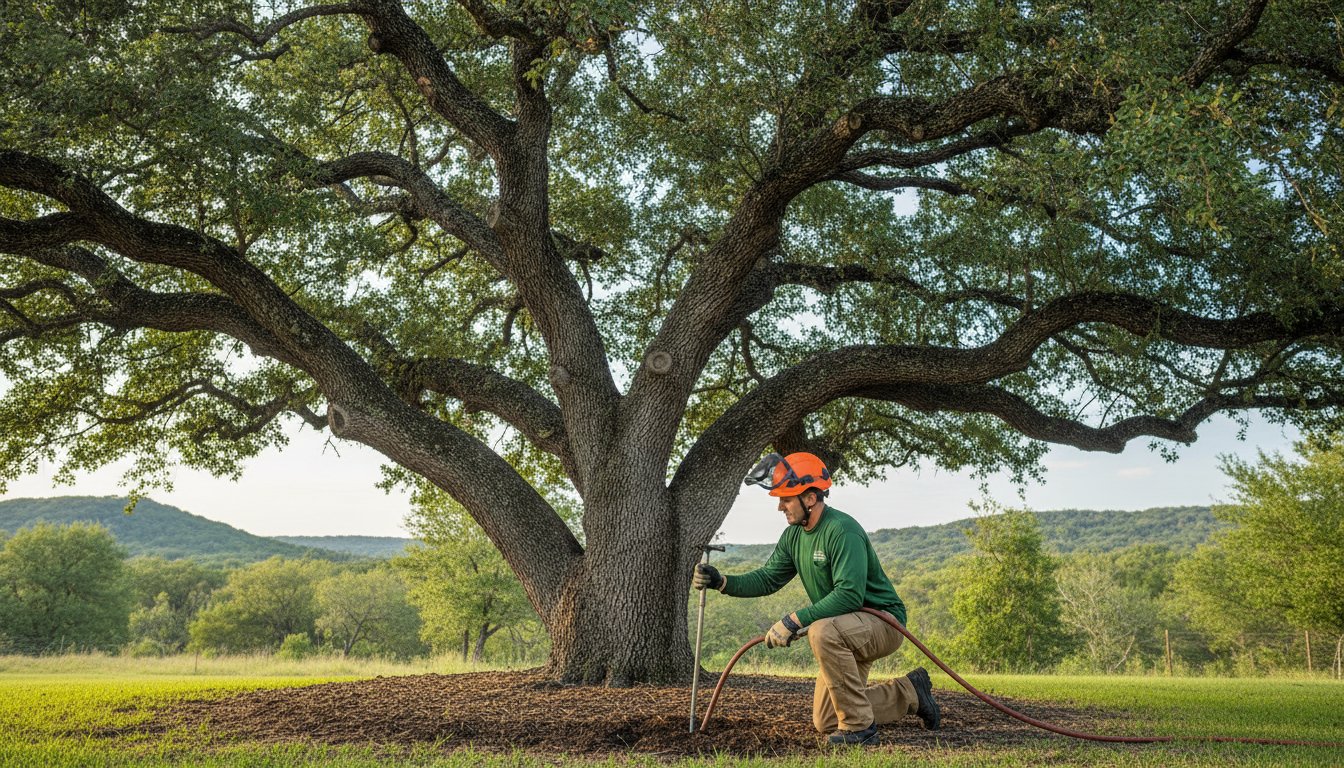
Did you know that nearly 70 percent of urban tree health issues stem from poor soil conditions that standard lawn fertilizers simply cannot fix? If you’ve noticed yellowing leaves or thinning canopies on your property, you aren’t alone. Many homeowners across Austin and Hays County struggle to keep their landscapes healthy against the backdrop of rocky, alkaline soil and extreme heat. Mastering a proper tree fertilization schedule for texas is the most effective way to protect your investment and boost property values by up to 15 percent.
We understand how stressful it feels to watch a prized oak tree decline. The team at We Love Trees is here to help you navigate the unique challenges of our regional climate. By following this 2026 guide, you’ll learn the exact timing for seasonal feedings and why deep-root injections outperform surface treatments. If your trees look stressed right now, you can request a quote for a professional soil analysis today. We’ll cover everything from the two-season rule to specific nutrient needs that prevent chlorosis and build resistance to Oak Wilt.
- Key Takeaways
- Table of Contents
- The Essential Tree Fertilization Schedule for Texas Homeowners
- Why Central Texas Soil Requires a Specialized Nutrient Strategy
- Deep Root Fertilization: The Superior Method for Texas Trees
- Species-Specific Feeding: From Live Oaks to Fruit Trees
- Professional Tree Care: When to Call a Certified Arborist
- Protect Your Canopy for the Years Ahead
- Frequently Asked Questions
Key Takeaways
- Learn why the early spring and late fall windows are the only safe times to feed your trees before the intense Texas summer heat arrives.
- Discover how a professional tree fertilization schedule for texas overcomes the “nutrient lockout” caused by our region’s rocky, alkaline caliche soil.
- Understand why deep root fertilization is the superior choice for delivering nutrients directly to feeder roots while bypassing thirsty lawn grass.
- Identify the specific nutritional needs of native species, including how Zinc supports Pecan harvests and how proper feeding builds Oak Wilt resistance.
- Know the critical signs that indicate your tree needs a certified arborist’s intervention rather than a standard landscape treatment.
The Essential Tree Fertilization Schedule for Texas Homeowners
Timing isn’t just a suggestion in Central Texas; it’s a survival strategy. Our 2026 weather cycles continue to bring unpredictable freezes followed by record-breaking heat. A proper tree fertilization schedule for texas ensures your oaks and elms have the energy reserves to withstand these extremes. If you feed too late, you risk pushing new growth right as the July drought hits. This causes unnecessary stress that can lead to long-term decline.
Trees require specific essential plant nutrients like nitrogen and phosphorus to build strong cell walls. While most homeowners think of feeding in the summer, that’s actually the most dangerous time. Fertilizing during a drought forces a tree to grow new leaves it can’t support. This often leads to yellowing or canopy dieback. We recommend sticking to the two primary windows of early spring and late fall.
To better understand how specialized feeding supports tree health, watch this helpful video:
The Early Spring Boost (February – April)
Spring is the most critical time for fueling canopy growth. Applying nutrients as your trees break dormancy allows them to build a dense leaf structure before the brutal July and August heat arrives. This early energy boost helps trees develop better water-retention capabilities, which acts as a natural defense against the coming drought. Bud break is the period when the first green tips emerge from the branches, signaling it’s time for the season’s first feeding.
The Late Fall Recovery (October – early December)
Once the summer heat breaks, your trees enter a secondary growth spurt that focuses almost entirely underground. Fall fertilization focuses on root development rather than new leaf growth, which is vital before the winter freezes arrive. This recovery phase replenishes the nutrients lost during the high-stress summer months. To ensure your yard is ready for the next cycle, you can request a quote for a professional soil assessment to see exactly what your soil is lacking.
Why Central Texas Soil Requires a Specialized Nutrient Strategy
Most generic lawn guides assume you have deep, loamy topsoil. In the Hill Country and Austin area, we deal with caliche. This rocky, limestone-rich layer is highly alkaline, often measuring a pH between 7.5 and 8.5. This high alkalinity creates a “nutrient lockout” where trees cannot absorb essential elements, even if they are present in the ground. When you follow a tree fertilization schedule for texas, you must account for this chemical barrier rather than just dumping nitrogen on your lawn. Without addressing the soil chemistry, your trees might be starving in the middle of a well-fed yard.
Professional soil testing is the first step in a responsible nutrition plan. It prevents the common mistake of “over-fertilizing,” which does more than just waste money. Excess nitrogen that isn’t absorbed by the tree often washes away during our heavy spring rains, ending up in sensitive areas like the Edwards Aquifer. By targeting only the specific needs of your soil, we protect the local environment while ensuring your trees get exactly what they need to thrive. If you aren’t sure what your soil is missing, you can request a quote for a professional soil analysis to get a clear picture of your property’s health.
The Role of Micronutrients in Central Texas
Iron Chlorosis is a common sight in local neighborhoods. You’ll see yellow leaves with distinct, dark green veins. This isn’t usually caused by a lack of iron in the soil, but rather by the high pH preventing the tree from taking it up. Manganese and Zinc are also frequently “locked” in our rocky soil, leading to stunted growth and poor fruit production in pecans. Standard nitrogen-heavy fertilizers often make this worse by forcing rapid leaf growth that the tree’s nutrient-starved system can’t support. We use specialized sulfur-based amendments to gently lower the pH in the root zone, making those locked-up micronutrients available to the tree again.
Soil Compaction in New Developments
In rapidly growing areas like Kyle and Leander, new construction is a major threat to tree health. Heavy machinery used during building crushes the soil, removing the tiny air pockets that roots need to breathe and absorb water. This compaction leads to chronic nutrient deficiency regardless of how much fertilizer you apply. Proper aeration and specialized tree care services in Wimberley and surrounding areas can help restore the soil structure. When soil is compacted, even the best tree fertilization schedule for texas won’t work unless you use deep-root injection methods to bypass the hardened surface and deliver nutrients directly where they are needed most.
Deep Root Fertilization: The Superior Method for Texas Trees
While a standard tree fertilization schedule for texas tells you when to feed, the method you choose determines if those nutrients actually reach the tree. Deep root fertilization is the process of injecting a specialized liquid nutrient blend directly into the ground, targeting the “feeder root” zone between 8 and 12 inches deep. This approach bypasses the surface layers that often prevent traditional fertilizers from doing their job. In our region, where soil is often thin and rocky, this direct delivery is the most reliable way to ensure your trees stay healthy and resilient.
One of the biggest obstacles to tree health in a typical Central Texas yard is the lawn itself. Research shows that turfgrass roots can capture up to 90% of surface-applied nitrogen before it ever reaches a tree’s root system. This means that if you are simply spreading granules on your grass, your mature oaks and elms are likely starving. Deep root feeding solves this problem by placing the nutrients below the grass line. It also significantly reduces fertilizer runoff into our local creeks and the Edwards Aquifer, making it a much more environmentally responsible choice for homeowners in Austin and Wimberley.
How the Deep Root Process Works
Our team uses specialized pressurized probes to deliver a custom nutrient blend evenly throughout the root zone. We focus our efforts on the “drip line,” which is the area directly under the outer circumference of the tree’s branches. This is where the most active feeder roots reside, ready to absorb moisture and minerals. Deep root feeding is the gold standard for tree fertilization in urban environments because it also provides a critical aeration benefit. The injection process fractures heavy Texas clay, allowing much-needed oxygen to reach the roots and improving overall soil structure.
Surface Spikes vs. Liquid Injection
Many homeowners try to use DIY fertilizer spikes, but these often fail to provide consistent results. Spikes concentrate nutrients in one small spot, which can actually “burn” sensitive roots while leaving the rest of the tree’s system hungry. Liquid injection provides a uniform distribution that is immediately available for uptake. This is especially important for high-value landscapes and commercial properties. If you manage a large site, our Austin commercial tree fertilization services provide the scale and precision needed to protect your investment. Whether you have a single backyard shade tree or a multi-acre property, professional injection is the only way to guarantee your trees get the fuel they need to survive our harsh summers.

Species-Specific Feeding: From Live Oaks to Fruit Trees
A one-size-fits-all approach to tree care often leads to disappointing results in our region. While the general tree fertilization schedule for texas provides the basic timing, the specific nutrients required depend heavily on the species. For instance, a native Texas Pecan has vastly different needs than a non-native Crepe Myrtle or a fruit-bearing peach tree. Understanding these nuances ensures you aren’t just applying chemicals, but actually supporting the long-term health of your landscape.
In Central Texas, some trees are better off removed than fed. Ashe Juniper, commonly known as “Cedar,” often competes with your high-value oaks for water and nutrients. If your property is overgrown with these water-thirsty evergreens, we recommend land clearing over fertilization to prioritize the health of your native shade trees. This targeted approach helps your most valuable trees thrive without competition.
Strengthening Oaks Against Oak Wilt
Since the 1980s, Oak Wilt has killed over 1 million trees in Central Texas. While fertilization isn’t a direct cure, it is a critical preventative measure. Healthy, well-nourished trees are better equipped to wall off fungal infections and maintain their vascular systems. When following your tree fertilization schedule for texas, it’s vital to avoid high-nitrogen spikes during the active Oak Wilt seasons. Rapid, weak growth can sometimes make a tree more vulnerable to stressors. Instead, focus on balanced, deep-root feeding that builds overall resilience. For trees already in high-risk areas, our Austin oak wilt services provide specialized treatments to protect your canopy.
Native Pecans and Heavy Feeders
Native Texas Pecans are notorious for their Zinc requirements. Because of our alkaline soil, Zinc is often locked away, leading to stunted growth and poor nut production. Regular Zinc applications are necessary to ensure a healthy harvest. Similarly, fruit trees like peaches and plums are the heavy feeders of our landscape. They require more frequent nutrient replenishment than a mature oak to produce quality fruit. Without consistent support, these species often become the first victims of our intense summer droughts.
Managing Non-Native Species
Ornamentals like Crepe Myrtles often show signs of stress before native species do. They are prone to yellowing and stunted blooming when soil conditions aren’t perfect. Proper feeding helps these non-native plants survive the transition between our wet springs and brutal summers. For more details on maintaining your largest assets, check out our Oak Tree Trimming Guide for specific pruning and care tips tailored to the Hill Country.
Professional Tree Care: When to Call a Certified Arborist
While a basic tree fertilization schedule for texas helps you plan, the expertise behind the application is what truly saves your landscape. Many homeowners rely on general landscapers who treat trees as an afterthought to the lawn. A certified arborist, however, views tree nutrition through a diagnostic lens. We don’t just spread generic granules; we analyze the tree’s health, soil quality, and local environment to determine exactly what is missing. This specialized knowledge is the difference between a tree that merely survives and one that truly thrives in our harsh climate.
There are times when standard fertilization isn’t the answer. If your tree shows signs of severe stress like canopy dieback, oozing sap, or deep trunk cracks, a “weed and feed” product could actually do more harm. High-nitrogen spikes often force growth that a weakened root system cannot support. In these critical moments, you need an expert to intervene with specialized care. Investing in professional nutrition is a smart financial move. The long-term ROI is clear when you consider that regular feeding prevents the massive expense of tree removal for a dead or dying mature oak.
Our approach at We Love Trees is built on decades of local experience. We understand the specific mineral deficiencies found in Austin and Wimberley soil better than anyone else. By addressing these gaps with precision, we ensure your property remains a lush, shaded sanctuary even during the hottest months of the year.
Customized Nutrition Plans
We believe in moving beyond the bag. Our team utilizes site-specific liquid blends delivered through professional deep-root injection equipment. This ensures that every tree gets a custom ratio of micronutrients, biostimulants, and soil conditioners tailored to its specific species. We monitor tree health year-round in the unpredictable Central Texas climate, adjusting our strategies as weather patterns shift. This proactive care keeps your landscape resilient against the next drought or freeze. If you’re ready for a tailored plan, contact our team for a professional arborist consultation.
The We Love Trees Commitment
Serving the Austin, Wimberley, and Hays County communities is more than a job for us; it’s a matter of local pride. We Love Trees is a family-oriented team of certified experts dedicated to preserving the natural beauty of our region. We want to ensure your property value grows alongside your healthy canopy for years to come. Our hardworking crew is ready to provide the efficient, affordable solutions you need to protect your landscape.
Protect Your Canopy for the Years Ahead
Maintaining a healthy landscape in Central Texas requires more than just regular watering; it takes a professional understanding of our region’s unique soil chemistry. We’ve explored how a strategic tree fertilization schedule for texas helps your trees build the energy reserves necessary to survive brutal summer heat and unpredictable winter freezes. by focusing on deep-root injection rather than surface spikes, you deliver nutrients directly to the feeder roots where they’re needed most, bypassing the competition from your lawn.
Our team at We Love Trees has proudly served the Austin and Wimberley communities since 2026. Our ISA Certified Arborists use specialized deep-root injection tech to bypass the “nutrient lockout” caused by alkaline caliche soil. This proactive care isn’t just about encouraging growth; it’s a critical tool for building resistance against Oak Wilt and avoiding the high cost of tree removal. We’re dedicated to providing the expert, neighborly service your property deserves.
Your trees are the most valuable assets on your property. We’re here to help you protect them with specialized care and a commitment to local environmental health that you can trust for years to come.
Frequently Asked Questions
What is the best month to fertilize trees in Texas?
The best months to follow a tree fertilization schedule for texas are late February through early April and October through November. These periods align with the natural growth cycles of native species while avoiding the stress of peak summer heat. At We Love Trees, we recommend these windows to ensure your trees have the energy reserves needed to thrive year-round.
Can I fertilize my trees during a Texas drought?
You should avoid fertilizing trees during the peak heat of a Texas drought. Adding nitrogen during water scarcity forces the tree to produce new growth it can’t sustain, leading to severe stress or dieback. It’s better to focus on deep watering until the temperature drops. Once the fall growth cycle begins, you can safely resume your nutrition plan.
How do I know if my oak tree needs fertilizer?
Look for yellowing leaves with dark green veins, a condition known as Iron Chlorosis that is common in alkaline Central Texas soils. Other signs include a thinning canopy, undersized leaves, or less than six inches of new twig growth per year. A professional soil analysis is the most accurate way to confirm specific nutrient deficiencies and determine the right treatment plan.
Is deep root fertilization better than surface fertilizer?
Deep root fertilization is far more effective than surface applications for mature trees. Surface fertilizers are often captured by turfgrass, which can steal up to 90% of the nitrogen before it reaches tree roots. Adhering to a tree fertilization schedule for texas that utilizes deep root methods ensures nutrients reach 8 to 12 inches deep while also aerating compacted clay soil.
Do newly planted trees need fertilizer right away?
Newly planted trees generally don’t need high-nitrogen fertilizer right away. Excessive nitrogen can discourage root establishment by forcing too much top growth before the tree is anchored. Instead, focus on root-promoting biostimulants or mycorrhizae during the first year. This helps the tree establish itself in our rocky soil before you introduce a standard feeding schedule during the second spring.
What kind of fertilizer should I use for Texas Live Oaks?
Live Oaks thrive on a balanced fertilizer that includes sulfur to help lower the high pH of local limestone soil. Look for blends containing chelated iron and manganese to prevent chlorosis and maintain a deep green canopy. Avoiding “weed and feed” products is crucial. The herbicides they contain can damage the sensitive root systems of mature oaks and elms.
How much does professional tree fertilization cost in Austin?
Professional tree fertilization costs vary based on the canopy size and the specific nutrient deficiencies identified in your soil. While rates fluctuate across Austin and Wimberley, deep root feeding is always a more affordable preventative measure than removing a dead tree. You can request a quote from our team to receive a precise estimate for your specific property.